The Lives and Works of the English Romantic Poets
Lecture 1: Romantic BeginningsLecture 2: Wordsworth and the Lyrical BalladsLecture 3: Life and Death, Past and PresentLecture 4: Epic Ambitions and...
Also Available in:
- Amazon
- Audible
- Barnes & Noble
- AbeBooks
- Kobo
More Details
Lecture 1: Romantic Beginnings
Lecture 2: Wordsworth and the Lyrical Ballads
Lecture 3: Life and Death, Past and Present
Lecture 4: Epic Ambitions and Autobiography
Lecture 5: Spots of Time and Poetic Growth
Lecture 6: Coleridge and the Art of Conversation
Lecture 7: Hell to Heaven via Purgatory
Lecture 8: Rivals and Friends
Lecture 9: William Blake—Eccentric Genius
Lecture 10: From Innocence to Experience
Lecture 11: Blake's Prophetic Books
Lecture 12: Women Romantic Poets
Lecture 13: "Mad, Bad, and Dangerous to Know"
Lecture 14: The Byronic Hero
Lecture 15: Don Juan—A Comic Masterpiece
Lecture 16: Shelley and Romantic Lyricism
Lecture 17: Shelley's Figures of Thought
Lecture 18: Shelley and History
Lecture 19: Shelley and Love
Lecture 20: Keats and the Poetry of Aspiration
Lecture 21: Keats and Ambition
Lecture 22: Keats and Eros
Lecture 23: Process, Ripeness, Fulfillment
Lecture 24: The Persistence of Romanticism
The verse of the English Romantic poets is as daunting in its scope and complexity as it is dazzling in its technique and beautiful in its language. Professor Willard Spiegelman illuminates masterpieces of English literature by poets Blake, Wordsworth, Coleridge, Shelley, Keats, and Byron, as well as women Romantic poets.
As with his first Teaching Company course, How to Read and Understand Poetry, his emphasis is on technique, on how a poem accomplishes its objectives, on "how it means." To this end, he meticulously dissects the poems, directing you to points of interest that merit close observation.
What Is Romanticism?
A much-abused term, Romanticism has at times been shorthand for "wild," "irregular," "gothic," and "modern." It has been associated with love of the exotic, revolt against reason, vindication and defense of the individual, liberation of the unconscious, reaction against science, worship of the emotions, return to nature, and so on.
These generalizations are not particularly helpful. Romantic poets never even identified themselves as "Romantic." But we can describe some common concerns among them:
They wrote about Man's relationship to nature, which, with the universe, they considered active, dynamic entities. There is, though, a counter-desire to escape from nature and to deny Man's connection to it.
There is a concern with society and politics, and an idealistic notion that humanity can transcend its enslaving traditions.
The Romantics were conscious of consciousness itself—of the power of the mind as a force for self-glorification and a seed of self-destruction.
The lectures focus on the poems themselves, and they also tell the story of six great poetic souls and the impact of their personae on their age.
Come to Know the Poets of the Course
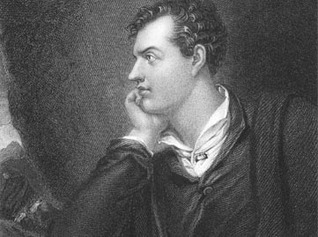
Lord Byron was a dashing, swashbuckling figure, "mad, bad, and dangerous to know" said a woman who did know—and loved—him. A man of monstrous appetites and ambitions, his insouciance and supreme self-confidence are reflected in his agile turns of phrase and his audacious, almost cheeky rhymes.
But there are other sides to Byron: the brooding Byronic hero, morose and reclusive, and his tender, generous, and stoic side. This is the man who would write to his sister, in the twilight of his truncated life:
Though the day of my destiny's over,
And the star of my fate hath declined,
Thy soft heart refused to discover
The faults that so many could find.
William Blake never achieved even the limited fame of his Romantic counterparts, but his radical, idiosyncratically Christian vision inspired many in the counter-culture movements of the 1960s.
An advocate of free love who remained happily married for all of his adult life, whose poetry was caustic social and political protest, Blake was an individual in the extreme. Much of his poetry, notably the Songs of Innocence and Experience, seems simple, but it contains layers of complexity and theological sophistication. As Dr. Spiegelman puts it, "difficulty is not the same thing as depth."
Here Blake ruminates on the nature of darkness and evil in these lines from "The Tyger":
When the stars threw down their spears
And water'd heaven with their tears:
Did he smile his work to see?
Did he who made the Lamb make thee?
Like many of the Romantics, William Wordsworth was a bundle of contradictions. Beginning his career, Wordsworth was involved in radical political circles; some speculate that, in Germany, he was an agent for the British Foreign Office.
His poetry is marked by guilt, loss, and inward reflection. Dr. Spiegelman puts it this way: "Wordsworth has struck many readers as sane, haughty, and impossible to know. The man who called the poet 'a man speaking to men' in the preface to Lyrical Ballads often seems troublingly opaque."
Later in life, though, Wordsworth found himself comfortably ensconced as a minor celebrity, an elite country gentleman and the Poet Laureate, light years removed from the anxiety of his yo...
- Format:
- Pages: pages
- Publication:
- Publisher:
- Edition:Great Courses, #2477
- Language:eng
- ISBN10:1565852966
- ISBN13:9781565852969
- kindle Asin:1565852966
About Author