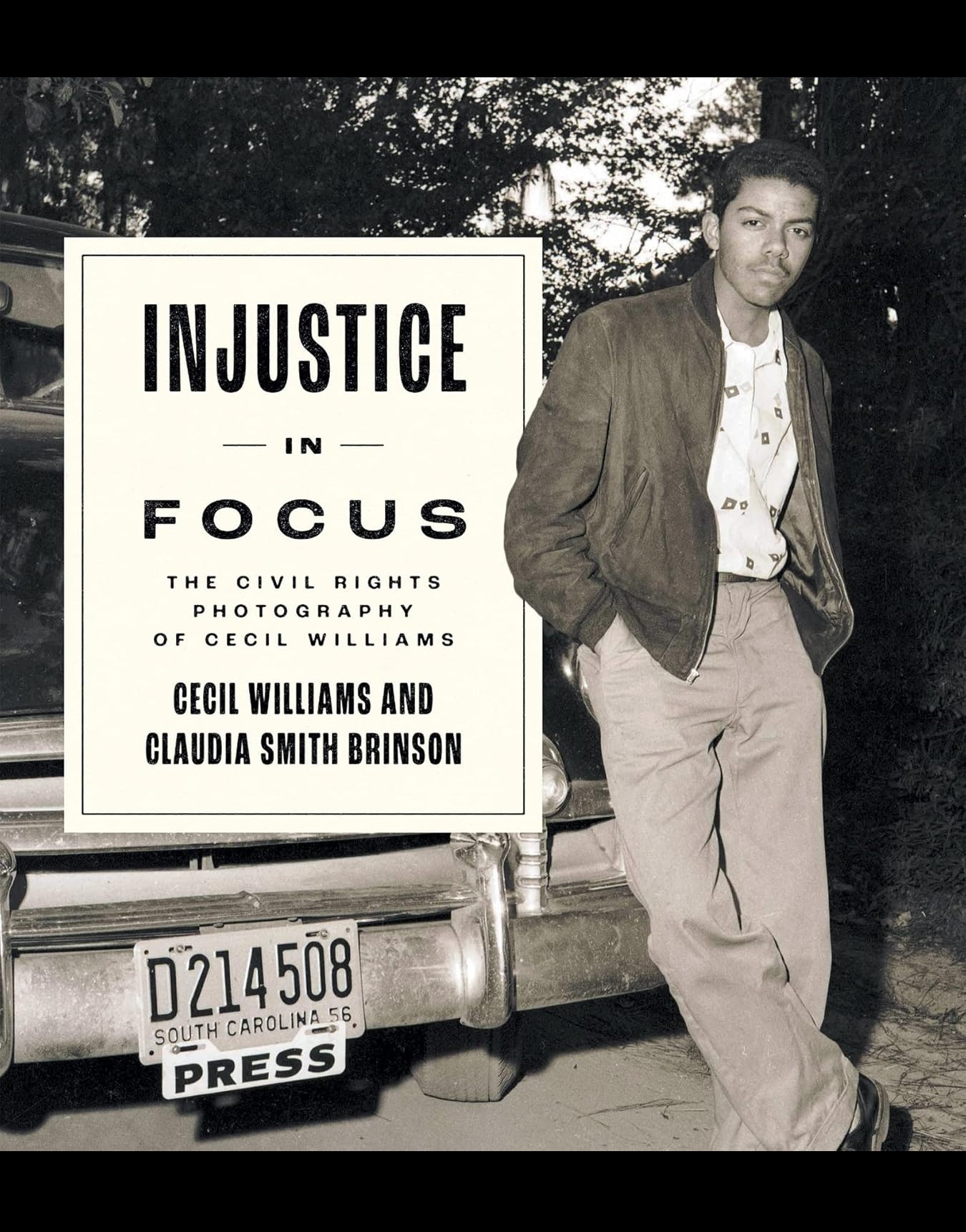
4 Published BooksClaudia Smith Brinson
Eleven Tidbits
1. I was a military brat. I lived in 16 different places by the time I was twenty-two, four outside the continental United States.
2. I read constantly, voraciously, and beyond my years, in my room, on my stomach on my bed, with a cat on my back. A grandmother nicknamed me “Bookie.”
3. My mother and my military-base schoolteachers, the World War II generation, taught that women must marry, have children, and sublimate personal ambitions. My father objected to my mother working, which she did anyway, eventually, but he had ambitions for me, his firstborn. At the time 60 percent of women attending college dropped out to marry. While a third of women worked, very few pursued careers. I became determined to attend college, build a career, and support myself.
4. The high school of my junior and senior years offered a literary magazine, annual class newspapers, and a school newspaper. I worked at all and discovered another, bolder self when holding a pen and notepad. Suddenly I could ask just about anybody just about anything: I was a reporter!
5. When it came time for college, I discovered my father did not pay state taxes (illegal!), so we had no “state of legal residency.” I had never lived in South Carolina but convinced the dean of the law school at the University of South Carolina to grant me in-state fees because my father had entered World War II from USC. I had figured out I could then attend a journalism school I could afford, with the help of what were called National Student Defense Loans.
6. I emancipated myself ( became legally responsible for my own care) and worked my way through school, skipping meals and a winter coat. I earned a bachelor’s in journalism, a bachelor’s in English, and, a little later, a master’s in mass communication. I believe art and education save lives.
7. Sometimes I was the first to hold a job – the first woman assigned to the news desk, for example -- or to argue for coverage of and take a particular assignment – what was then called the gay and lesbian community, for example -- at the newspapers where I worked. Or to achieve a certain right – paid maternity leave with job retention, for example. When I studied journalism in the 1970s, women comprised 22 percent of newsroom journalists and were mostly confined to features and to women’s sections, tellingly called “soft news.” Minority journalists were so rare at white-owned newspapers that counts didn’t include them until the 1980s: 5.75 percent of newsroom journalists in 1984.
8. The peripatetic youth, an enduring desire for fairness, and an eye and ear for “the emperor has no clothes” made me an advocate for the people and stories ordinarily missing from news pages. I didn’t want the coveted Statehouse beat; I fought for and wrote stories about children, women, minorities, the elderly, the poor. I proposed and ran counts of how often women and minorities landed on the front page – and in what way. I organized conferences and served as a national writing coach. I annoyed many colleagues and most managers. Luckily, though, I also won prizes. When I left newspapers to teach full-time in 2006, women accounted for 37.7 percent of newsroom staff, minorities 13.87 percent.
9. As I sought the missing I found the heroic. These are the people who fill the pages of "Stories of Struggle." They filled me with admiration and love, and I could not live with the fear that their stories would die with them. I believe deeply in stories. We cannot truly know others if we do not know their stories. When only people in power tell the stories -- and tell them a certain way to maintain power -- the truth is missing.
10. I believe, as Marie Shear wrote in “New Directions for Women,”that “Feminism is the radical notion that women are people.” I believe, as Nell Irvin Painter instructs in "The History of White People," “Race is an idea, not a fact.”
11. I believe we are all the same, wishing for love