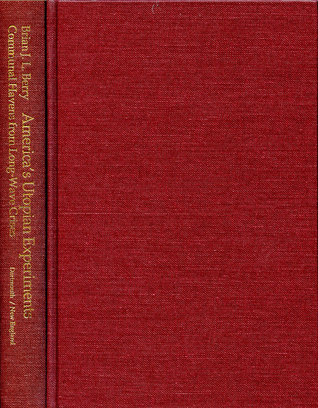
58 Published BooksBrian J.L. Berry
Brian Joe Lobley Berry was a British-American human geographer whose groundbreaking work helped revolutionize the field of geography. Educated in the UK and the US, he earned a Ph.D. from the University of Washington in 1958 and became a leading figure in urban and regional studies. His early research at the University of Chicago in the 1960s contributed to geography's “quantitative revolution” and established him as the most-cited geographer for over two decades.
Berry held prominent academic positions throughout his career, including appointments at Harvard University and Carnegie Mellon University, before joining the University of Texas at Dallas in 1986 as the Lloyd Viel Berkner Regental Professor. He was a founding dean of the School of Economic, Political and Policy Sciences, where he continued his research into macrohistorical trends, political behavior, and quality-of-life studies.
His academic achievements earned him numerous honors, including election to the National Academy of Sciences, the American Academy of Arts and Sciences, and the British Academy. He also served as president of the Association of American Geographers and received the prestigious Victoria Medal from the Royal Geographical Society. In 2005, he was named the Laureat Internationale de Géographie Vautrin Lud, considered the "Nobel Prize of Geography."
Over his prolific career, Berry published more than 550 books and articles, mentored over 150 PhD students, and contributed significantly to both academic theory and practical urban planning efforts. He was also an avid genealogist, with publications exploring genetic ancestry. Berry retired in 2020 and passed away in 2025 at the age of 90.