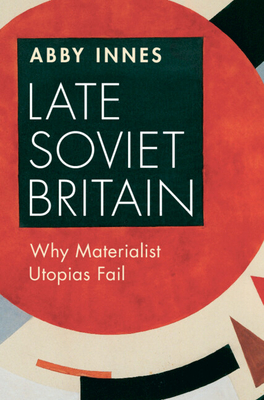
3 Published BooksAbby Innes
Abby Innes is an Assistant Professor of Political Economy in the European Institute, at the London School of Economics.
Before joining the European Institute in 1997 she was a Visiting Scholar at MIT and was a Jean Monet Fellow at the European University Institute, (2001-2). Before her PhD Abby worked as a political analyst in the Office of the Government, Czechoslovakia; as Assistant to the General Secretary of the Czechoslovak Foreign Ministry and as a researcher for the Policy Studies Institute.
A serious illness meant taking a break from LSE from 2005-2009. Since returning to research her interests turned towards exploring the ongoing patterns of party-state ties in Central Europe but also the affinities between Neoliberalism and Marxism-Leninism as materialist utopias. She joined the Editorial Board of East European Politics in 2011.
She was awarded a British Academy Mid-Career Fellowship in 2017-2018 to study neoliberal reforms to the state with particular reference to the UK.
She has taught Varieties of Capitalism; the political economy of Europe, the comparative political economy of Central Europe, and a course on the political economy of post-communist transition and emerging markets. She was awarded an LSE Teaching Prize in 2002; the European Institute Departmental Teaching Prize 2011, 2013 and 2015. In the LSE Student Union Student-Led Teaching Excellence Awards she was a Nominee in 2014, a Commended Nominee in 2015 and a Highly Commended Nominee, 2016. She is currently the Teaching Chair of the European Institute
Research Interests
The political economy of Central Europe; models of development in emerging markets; the development of party state ties in Central Europe; comparative materialist utopias; the political economy of Marxism Leninism and Neoliberalism; varieties of capitalism; the political economy of supply-side reforms of the state in advanced capitalist systems.
Expertise Details
Czechoslovak Politics; Political Economy of Central Europe; Varieties of Capitalism; Supply-side reforms in advanced capitalist states; Political economy of Marxism Leninism and of Neoliberalism; Neoclassical Economics