34 Published BooksOctavian Goga
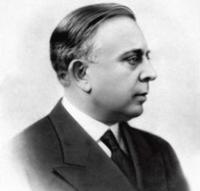
Goga was an active member in the Romanian nationalistic movement in Transylvania and of its leading group, the Romanian National Party (PNR) in Austro-Hungary. Before World War I, Goga was arrested by the Hungarian authorities. At various intervals before the union of Romania and Transylvania in 1918, Goga took refuge in Romania, becoming active in literary and political circles. Because of his political activity in Romania, the Hungarian state sentenced him to death in absentia.
During World War I, he joined the Romanian Army and took part as a soldier in the Dobruja campaign.
In the interwar period he left the PNR to join General Alexandru Averescu's People's Party (PP), a populist movement created upon the war's end.
Goga clashed with Averescu over the latter's conflict with King Carol II. A founder of the minor PP splinter group naming itself the National Agrarian Party, he led it into an alliance with A. C. Cuza's National-Christian Defense League, forming the National Christian Party.
Goga became Prime Minister of Romania and served from 28 December 1937 to 10 February 1938. He had been appointed by King Carol, in his attempt to increase his own power. Indeed, Carol wrote in his diary that he knew Goga was a human cipher, and hoped that once his government collapsed, it would free him to seize power for himself.
The initials of the party feature alongside the names of its joint leaders: A. C. Cuza and Octavian Goga
On 12 January 1938 his government stripped Romanian Jews of their citizenship. Besides being an anti-Semite himself, Goga attempted to outflank the Iron Guard's popular support.
In press interviews at the time he said the following:
The Jewish problem is an old one here, and it is a Romanian tragedy. Briefly, we have far too many Jews.
For us there is only one final solution of the Jewish problem—the collection of all Jews into a region that is still uninhabited, and the foundation there of a Jewish nation. And the further away the better.
After his resignation, Goga withdrew to his estate in Transylvania, where he suffered a stroke on 5 May 1938. He died two days later.